Sicily: Agrigento
Oct. 2nd, 2011 09:46 pm![[personal profile]](https://www.dreamwidth.org/img/silk/identity/user.png) ewx
ewxAfter a week in Palermo our next stop was Agrigento, on the southern coast of Sicily. In principle getting there was a train trip; in practice a combination of engineering and poor information meant it was a train trip, a bus trip, a two hour wait in the sun at Aragona Caldare, and another bus trip. With better information the last three steps would have been a single bus trip.
Since we spent the remainder of the afternoon on the beach, with occasional breaks for the local ice cream/drink vendor and I to practice our English and Italian on each other, it wasn’t so different to plan in the end anyway.
We stayed at the Foresteria Baglio della Luna, which was pricey but very nice. The pictures on its own website will give you some idea, later on I snapped it from a distance:
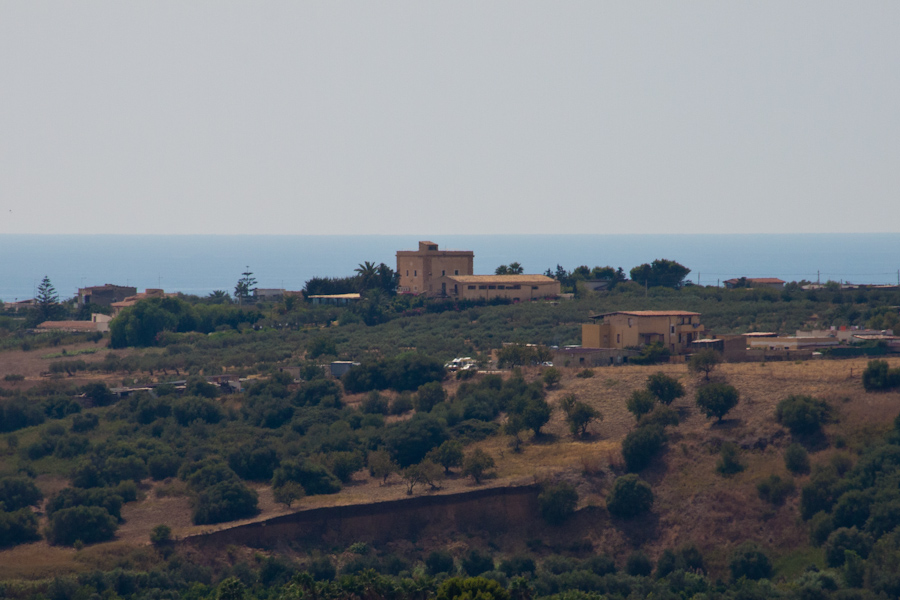
Our second evening there was shared with some well-spoken English yachters. We ate there both nights, expensively but well, and cheerfuly disposed of an evening with G&Ts in the courtyard. We also took advantage of the facilities available:

One of the neighbours had a engaging gate (and a pretty funky-looking house):
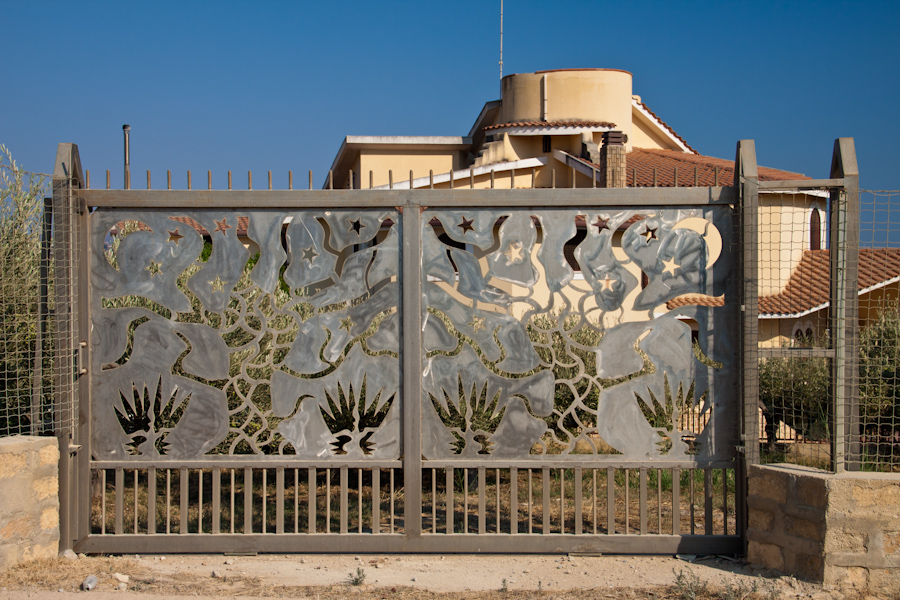
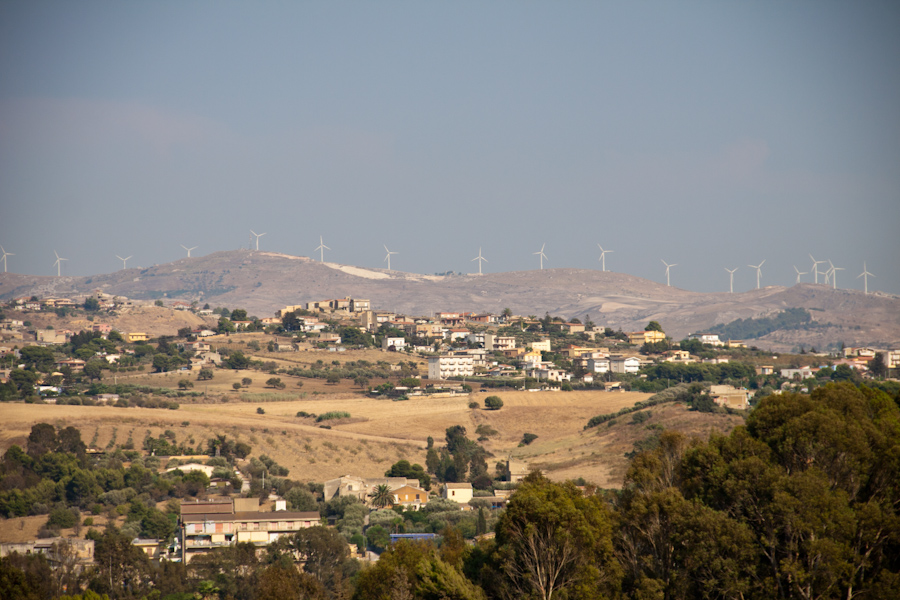
We noticed the wind farm on the journey across Sicily; here seen from near the hotel:
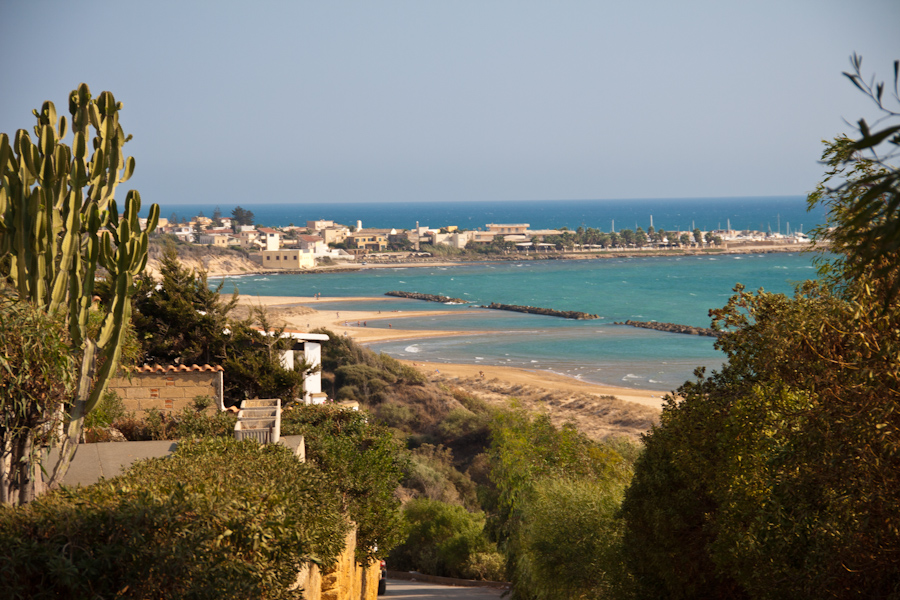
I’m not sure if this was the exact beach we were on but it was certainly near and the sheltered construction was the same:
Cargo ships were visible off the coast for our entire stay; they didn’t seem to be going anywhere:

Anyway, enough of all that. The point of the exercise was that between our hotel and Agrigento can be found the Valley Of The Temples, something that sounds like it belongs in The Mysterious Cities Of Gold, and indeed, some of the temples are in a state of repair that is completely consistent with a visit from Esteban and friends. The temples may arguably be in a valley with respect to Agrigento itself but compared to everything else around them they are actually on a fairly imposing ridge, as you can see:
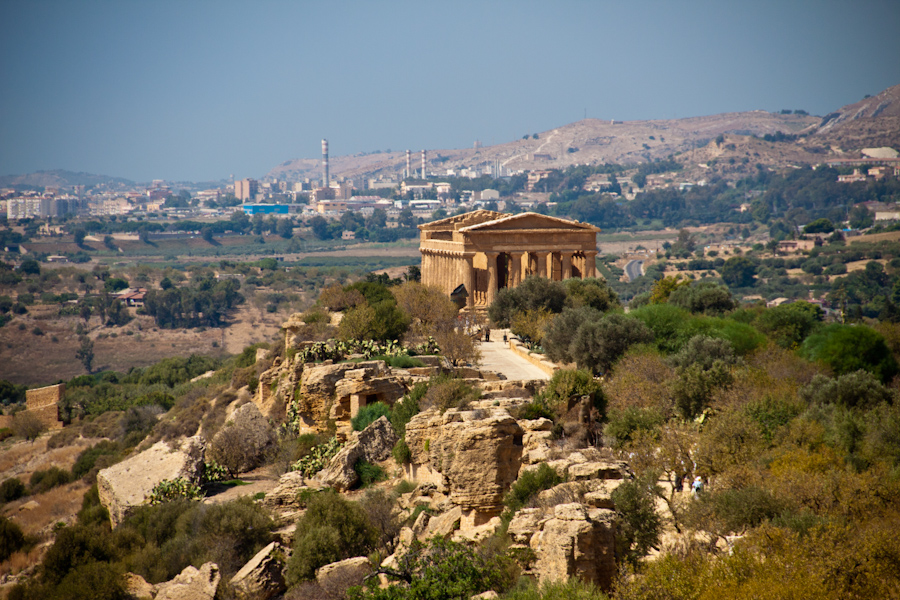
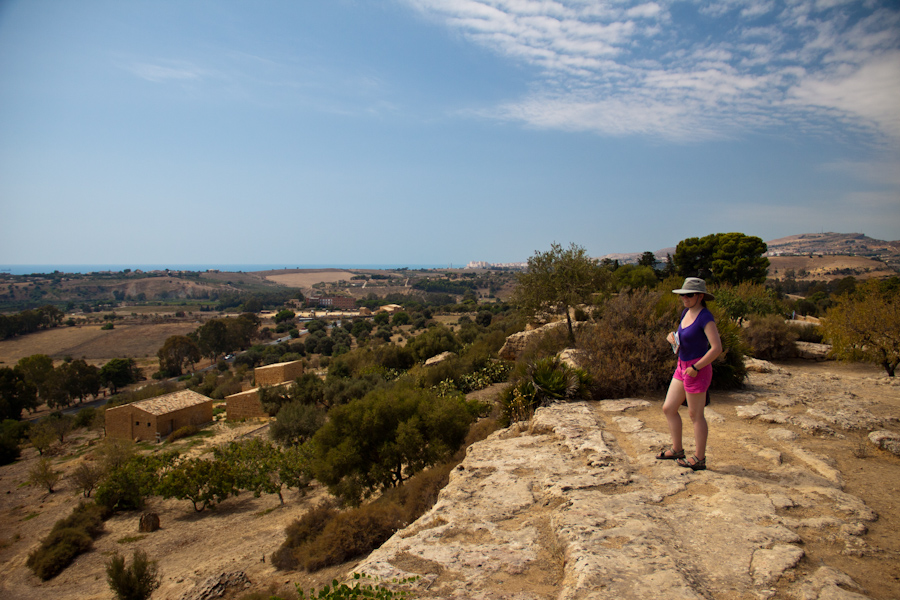
We walked from our hotel to the temples, it was a fair distance (as you may be able to temple from the photo earlier) along some fairly fast roads. There might be a bus from the town; from our hotel, if you don’t fancy the walk, then you probably ought to have arrived by car.
The temples are in various states of repair. The Temple Of Juno isn’t in too bad shape:
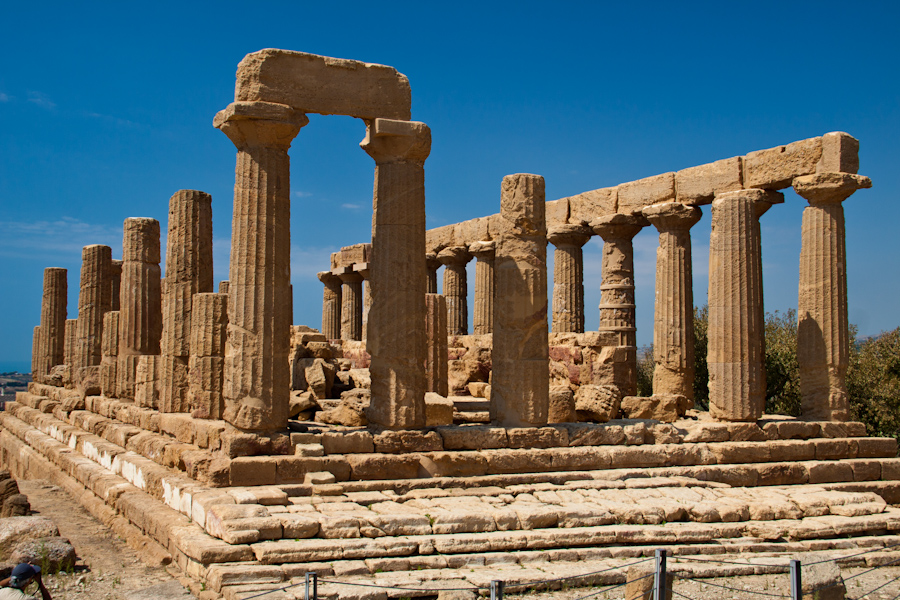
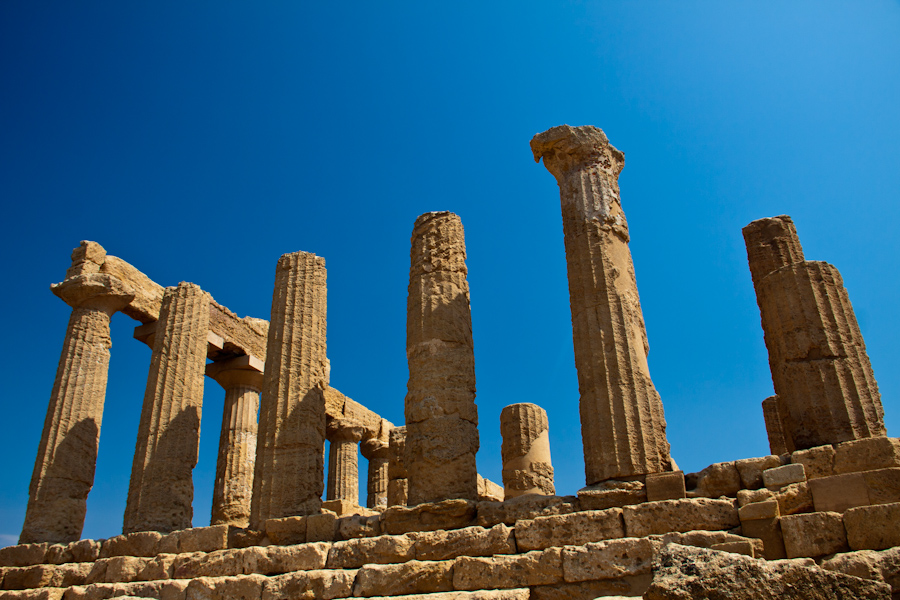
A word of caution is in order - the identifications of the temples with particular gods is “conventional” i.e. at best guesswork rather than solid fact; the reality is that nobody really knows who the various temples were dedicated to. In some cases there has been a degree of restoration. That’s something that, on the whole, I approve of - but it’s worth being aware that one may be seeing the result of more than just ancient work and a great deal of time.

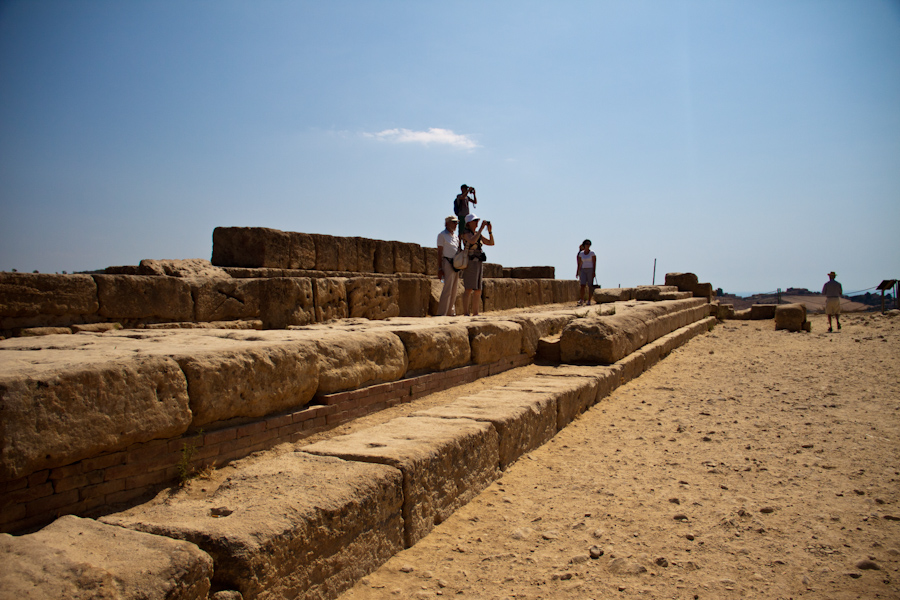
The altar in front of the temple is now primarily used as a vantage point for photographers.
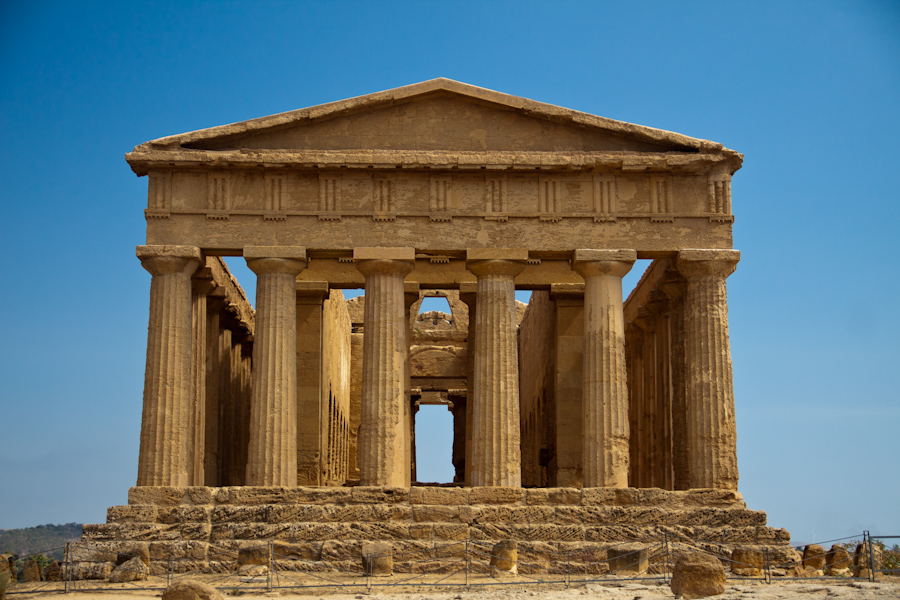
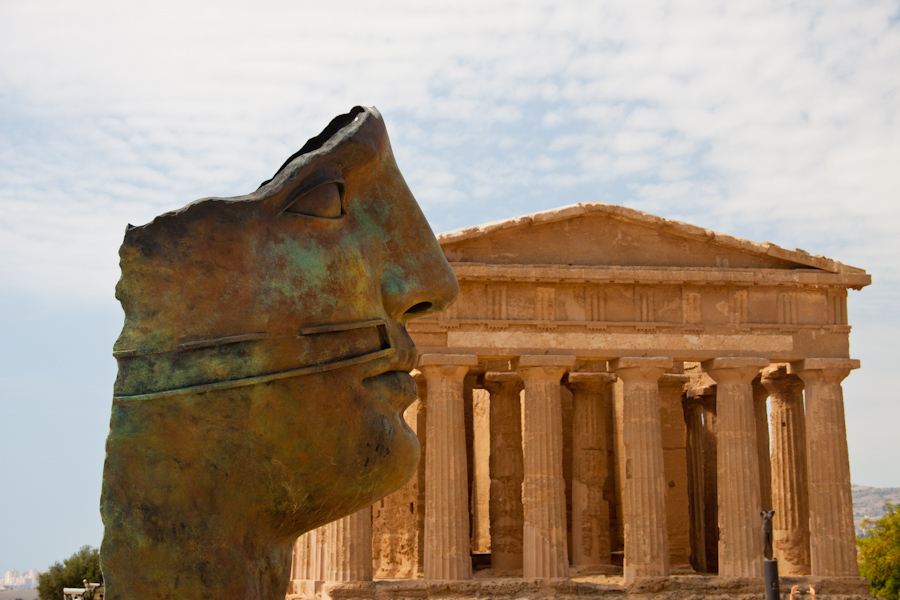
The Temple of Concorde, in rather better repair due (if I remember correctly) to having been used as a church for a while:


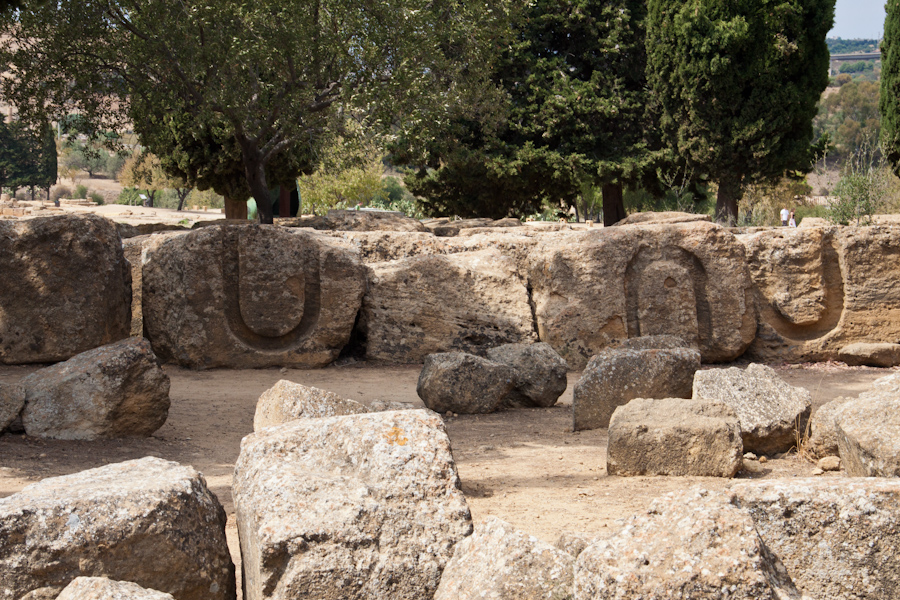
We suspected that the U-shapes were to do with how the blocks were lifted into position:
I think this part of the remains of the Temple of the Dioscuri
(i.e. Castor and Pollux):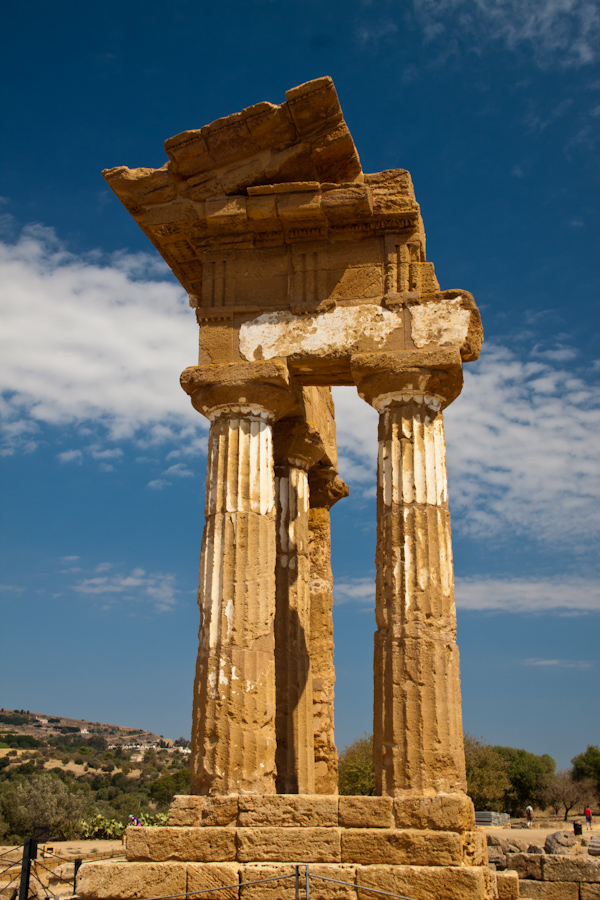
The valley of the temples has a number of more recent features, though in the case of the Byzantine-era tombs, nevertheless still pretty old:
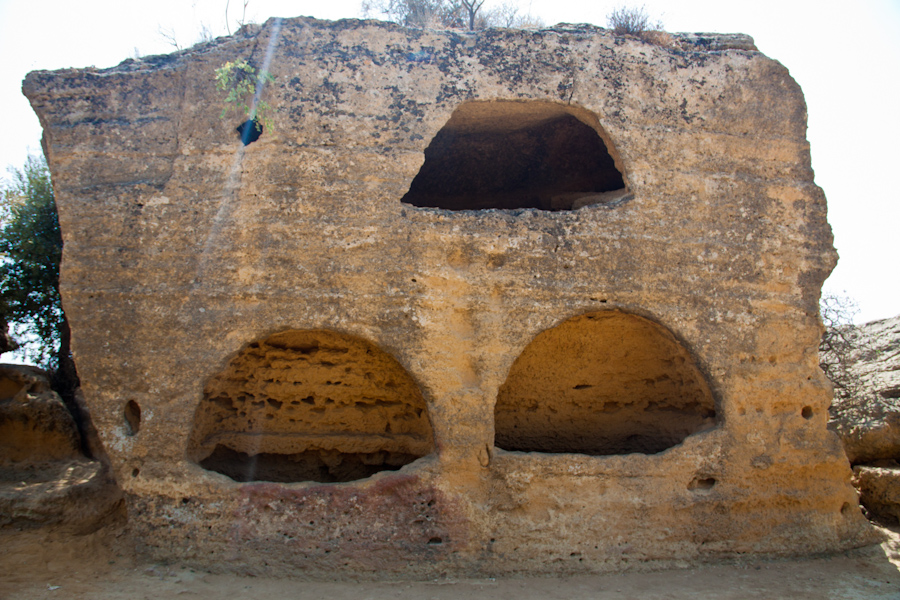
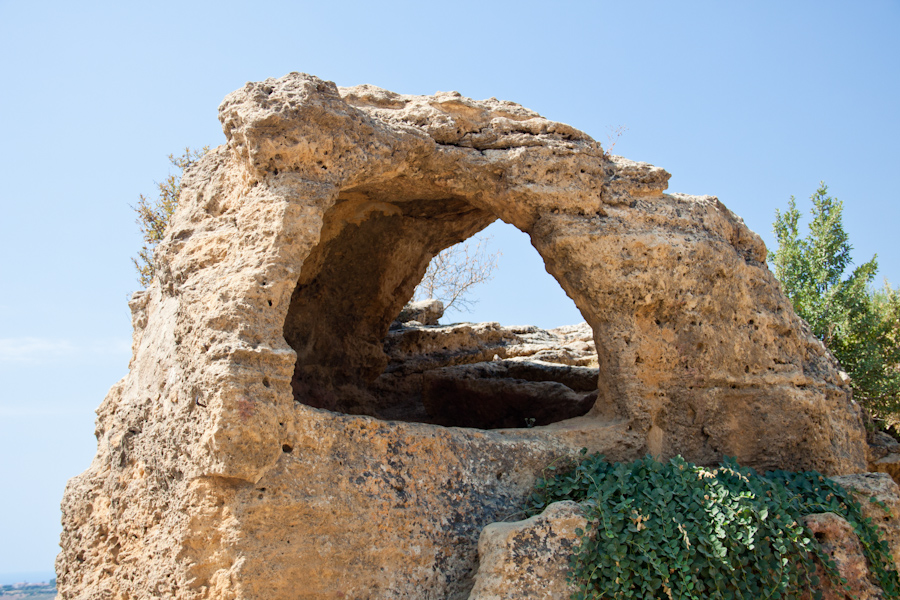
It is also well supplied with modern (last decade or so) statuary, much of it with a distinctly distressed theme. This is a female version of Icarus, if I read the sign right:

Daedalus:

Eros Bendato Screpolato. The anglophone portion of the web describes similar sculptures by the same creator as “Eros bound”, but online and paper dictionaries seem to agree that bendare is “to bandage” (bendato being the past participle, i.e. “bandaged”. I think “Eros bound” is more euphonious in English, but take your pick. screpolato translates rather more reliably as “cracked”.

The sculptor responsible is one Igor Mitoraj. The style seems to be an attribute of the artist rather than of the setting, but I thought it fit well and was a great adornment to the “valley”. I don’t know what the original creators and users of the temples would have made of it but the modern visitors seemed to like them, standing in front of them for holiday snaps and so on.
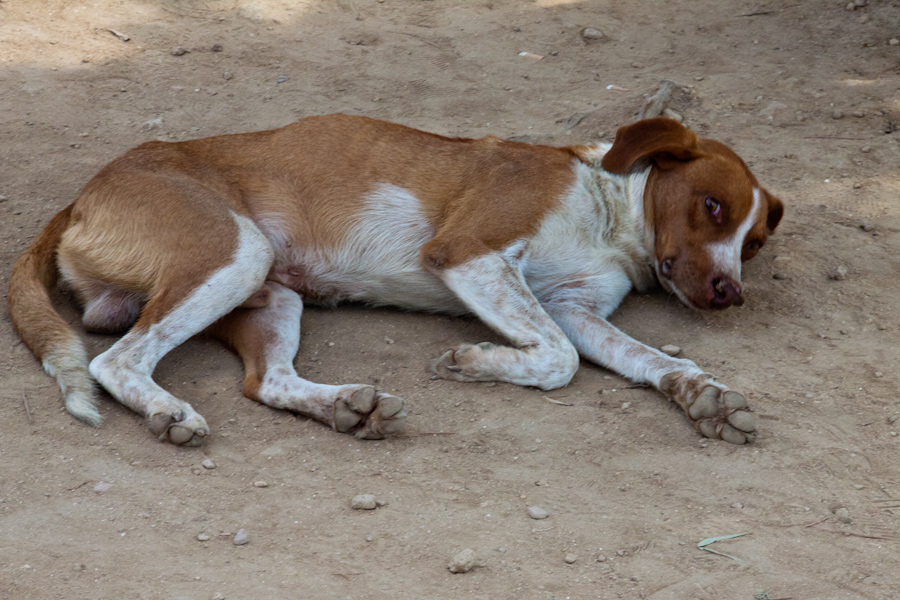
It is also well-supplied with rather dozy dogs (quite probably strays). Idly looking up at passing tourists was about the limit of their activity:
We stopped here a couple of times for food and something to drink. There are also places to eat outside the temple area and I think the tickets allow re-entry (they certainly permitted leaving and then entering the disjoint zone across the road).
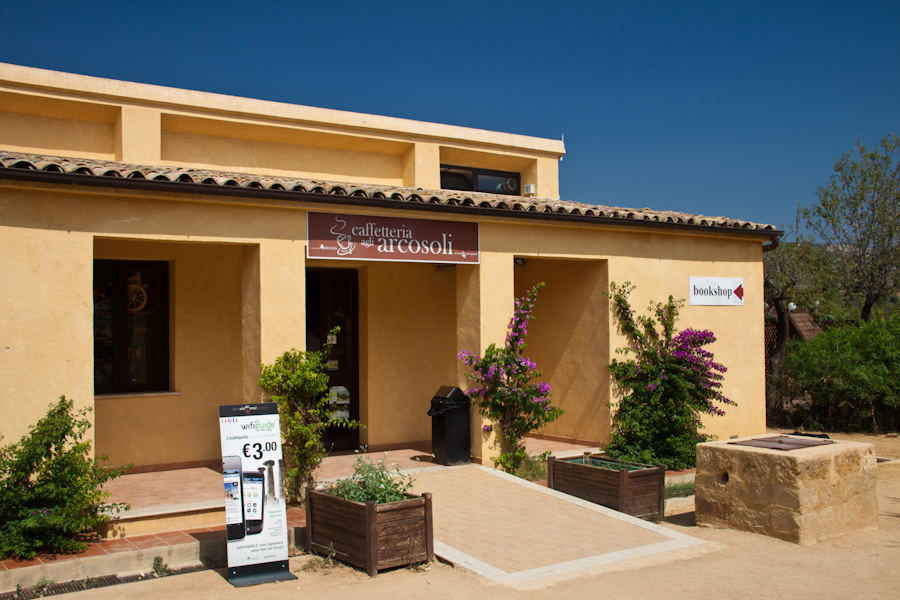
A pleasant offshoot of the temple zone is the Kolymbetra garden, which is dominated by prickly pears (one of which attempted to bombard me) and citrus fruits. A type of orange:

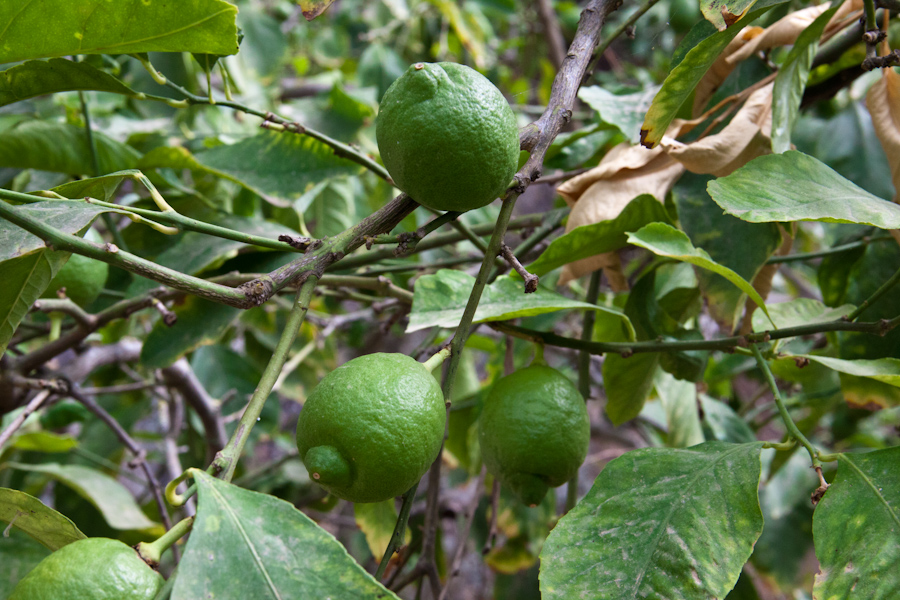
Lemons:
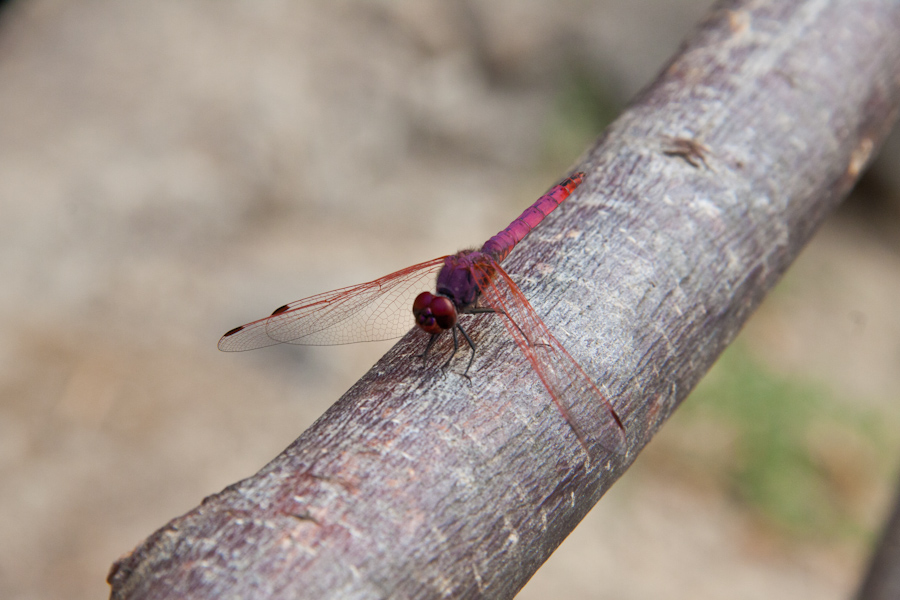
We spotted some dragonflies. Dragonflies can be relatively easy to photograph - they fly off often but they tend to return to the same spot to land. I didn’t lug a macro lens all the way to Sicily and back so this is as good an image as you’ll get l-):
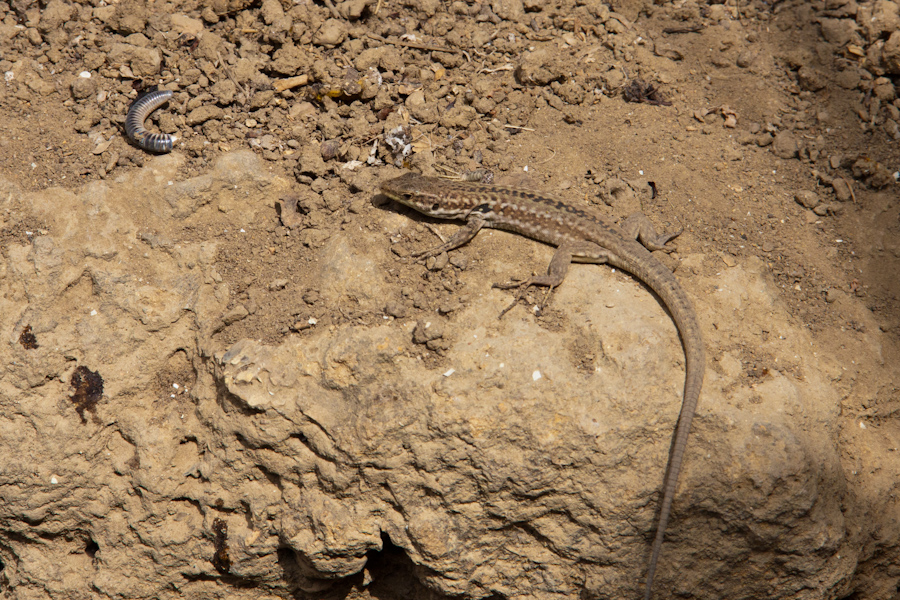
The place was crawling with lizards:
We also visited the site’s museum, which is a little to the north of the temples.
Bes:

A Telamon:
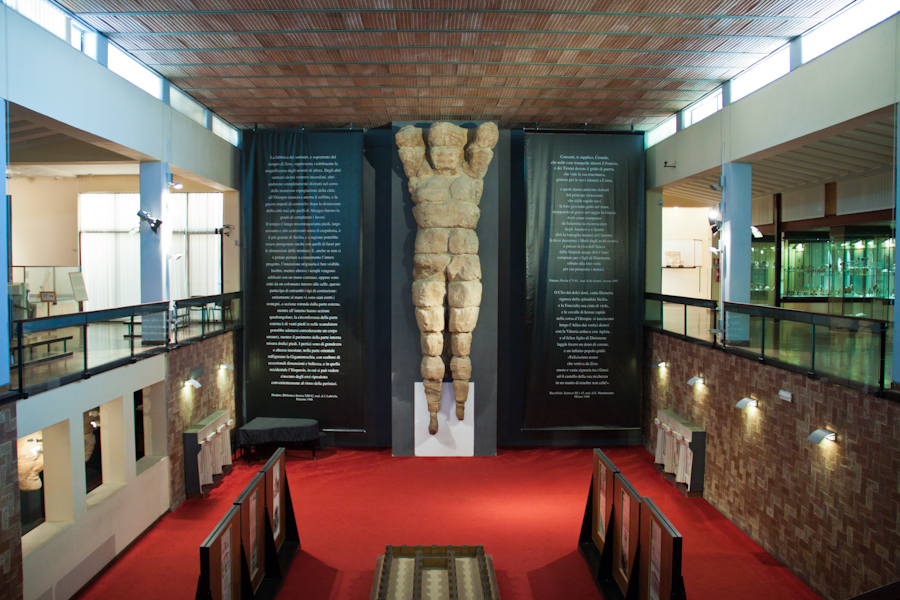
A somewhat better-preserved head of a Telamon:

Head of a sphinx:
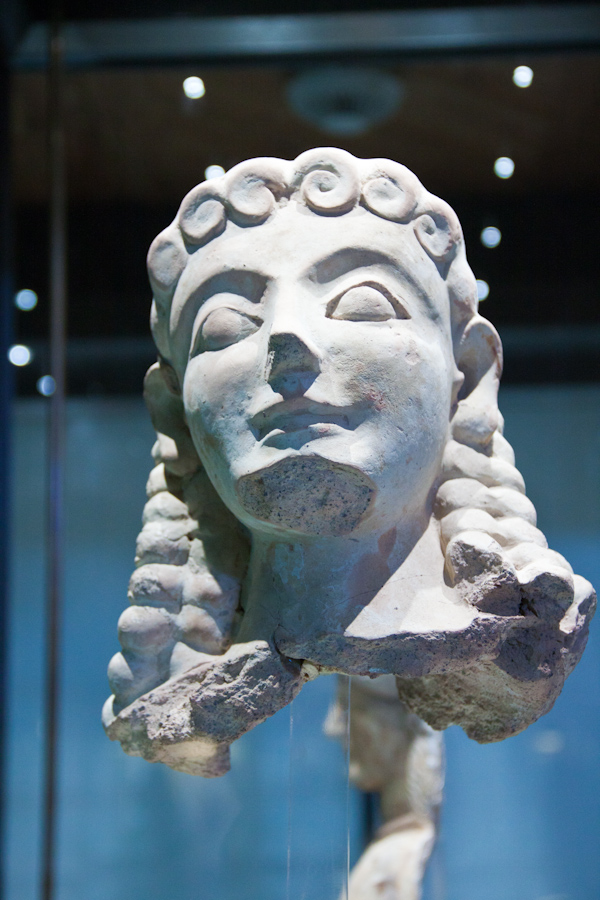
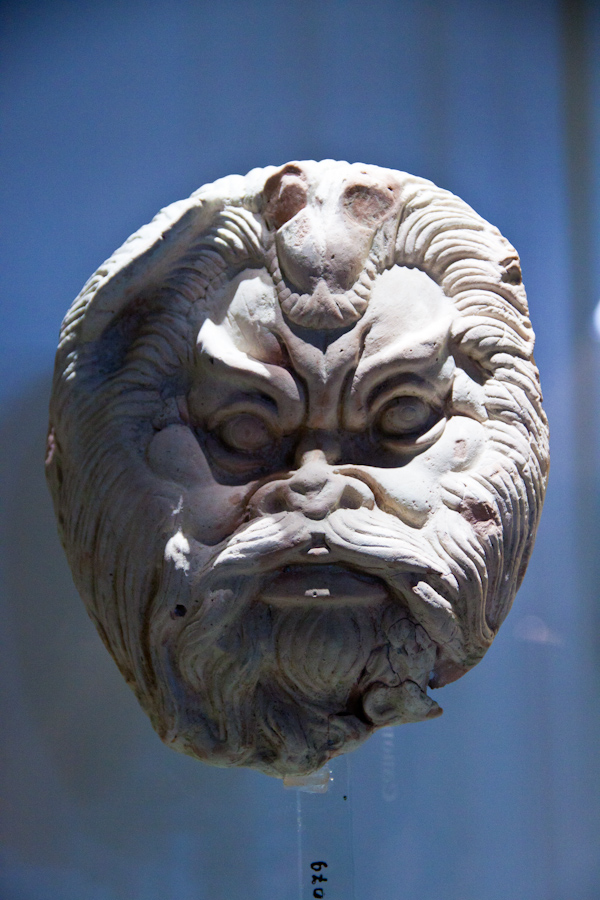

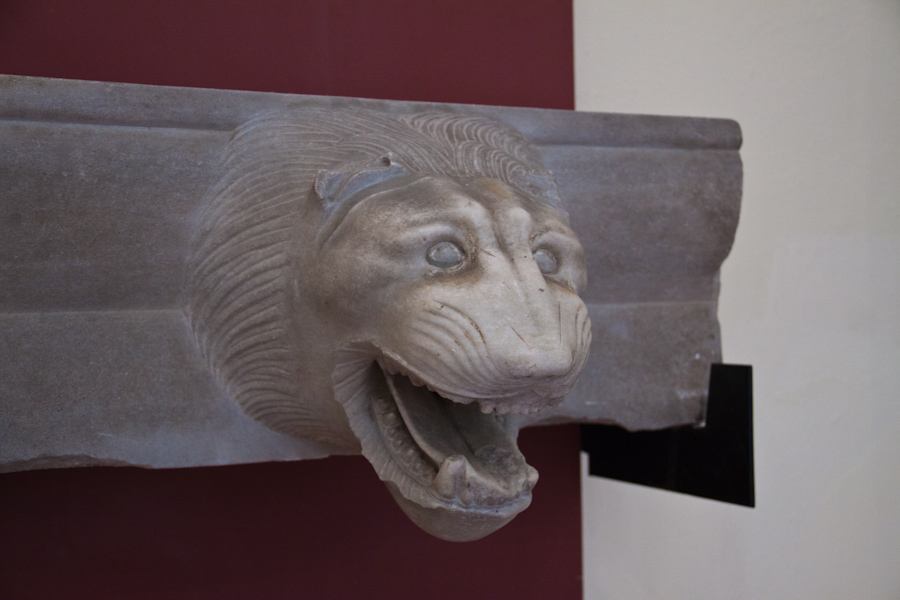
From a sarcophagus:
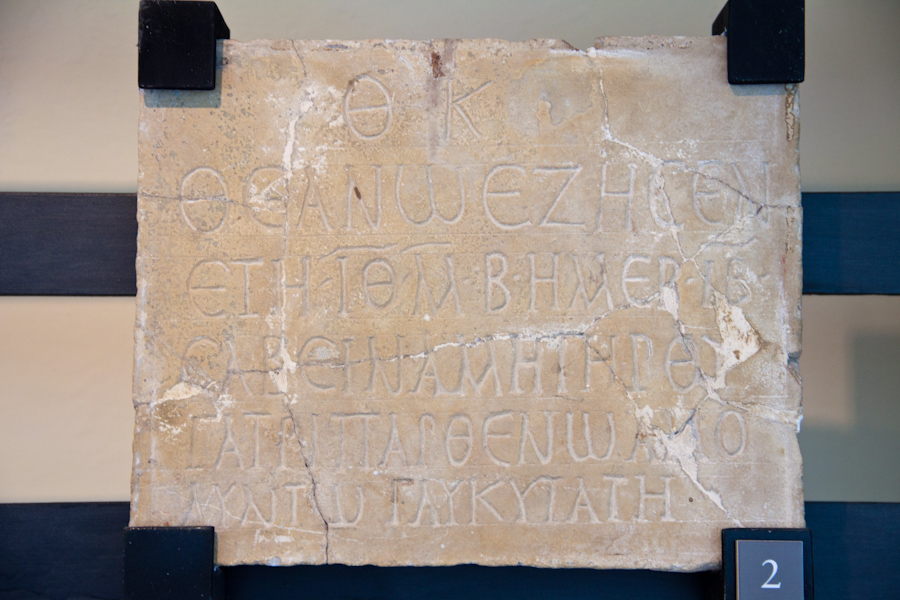
This was out front:
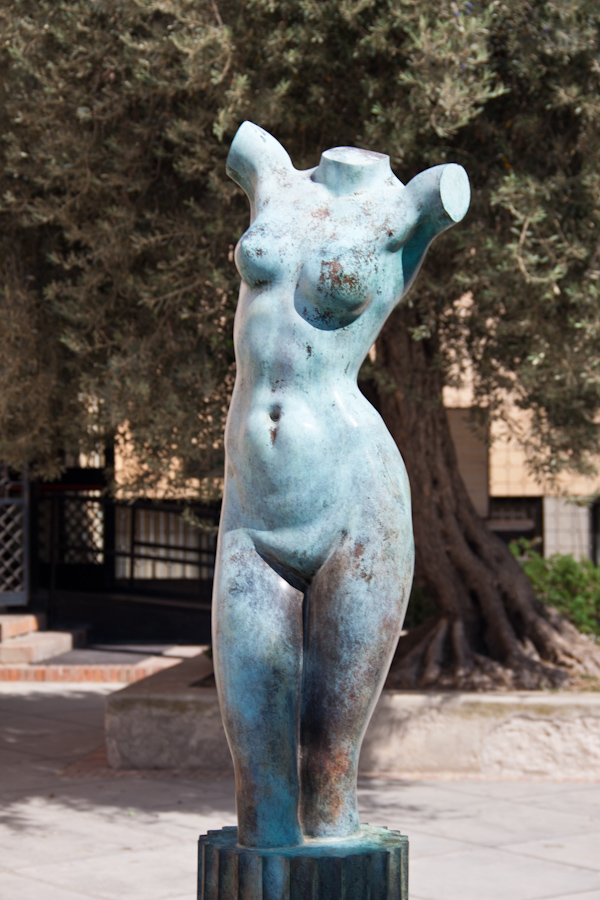
But I prefer this l-):
(no subject)
Date: 2011-10-03 10:26 pm (UTC)